ToolsWebBeta
Electrical Unit Converter

Volts to Amperes Calculator

The Volts to Amps Calculator converts voltage into current using watts, helping you perform accurate electrical current calculations.
Cannot convert V to A. Missing required input: resistance.
Recent
Nothing here yetYour recent activity will appear here
Volts (V) Amps (A)

What is a Volts to Amps Calculator?

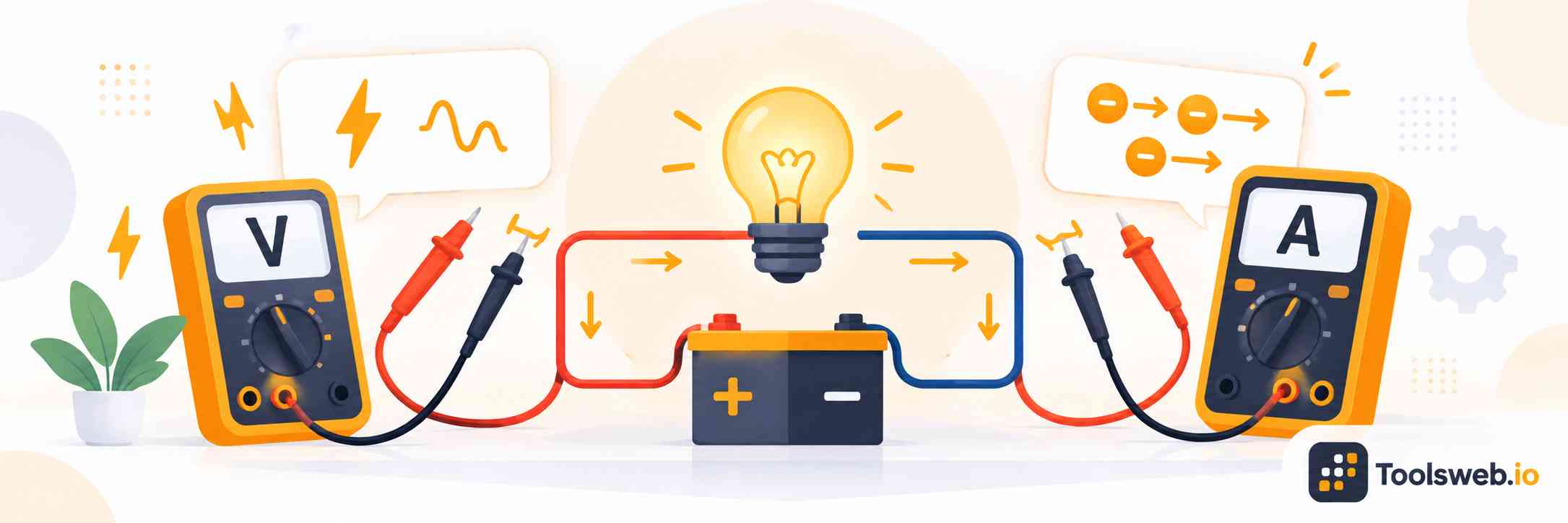
A Volts to Amps Calculator helps determine electrical current from voltage using power or resistance values, simplifying electrical load calculations for AC and DC circuits.

Voltage

Voltage is the electrical potential difference that drives charge flow through a circuit. Measured in volts, it influences current draw, electrical power, and load behavior in AC power systems, DC circuits, transformers, inverters, and residential or industrial equipment.

Current (Amps)

Current, measured in amperes, represents the flow of electric charge through a conductor. It helps determine operating current, load current, equipment requirements, circuit protection needs, and conductor sizing for electrical installations and devices.

Volts to Amps Formula

Use the appropriate formula based on whether power or resistance values are available to calculate amperage accurately.

Formula Using Watts

When electrical power is known:

I=PV I=\frac{P}{V}
Formula Using Resistance:

When resistance is known, apply Ohm's Law:

I=VR I=\frac{V}{R}
Where:

  • II = Current (Amps)
  • VV = Voltage (Volts)
  • RR = Resistance (Ohms)
  • VV = Voltage (Volts)

Practical Example of Volts to Amps Calculations

If a device uses 600W600W at 120V120V:

I=600120=5A I=\frac{600}{120}=5A
If voltage is 24V24V and resistance is 12Ω12\Omega:
I=2412=2A I=\frac{24}{12}=2A

How to Convert Volts to Amps?

Follow these simple steps to perform a reliable voltage to current conversion for electrical calculations.

Step 1

Enter Voltage Value

Input the supply voltage value accurately.

Step 2

Enter Power or Resistance

Provide watts or resistance in ohms.

Step 3

View Amps Result

Review the calculated amperage instantly.

Features of This Volts to Amps Calculator

This volts to amps calculator simplifies electrical current calculations using trusted formulas and practical workflows. It helps users estimate amperage for AC and DC systems while improving accuracy, usability, and decision-making across residential, educational, and industrial applications.

Fast and Accurate Calculations

The calculator delivers instant results using established electrical formulas such as Ohm's Law and Watt's Law. It minimizes manual errors during current estimation and supports dependable electrical load calculations for voltage, power, and resistance values.

Supports Multiple Formulas

Users can calculate current using either electrical power or resistance inputs. The tool accommodates different calculation methods, making it suitable for circuit analysis, current draw estimation, and varying electrical engineering scenarios involving AC and DC systems.

Beginner Friendly Interface

The straightforward interface guides users through each step without requiring advanced technical knowledge. Students, DIY users, and first-time learners can understand amperage calculations while becoming familiar with concepts like voltage, current, and resistance.

Works on Mobile and Desktop

The calculator functions smoothly across smartphones, tablets, laptops, and desktop devices. Users can perform voltage to current conversions anytime, whether on-site during installations or while reviewing electrical specifications remotely.

Useful for Electrical Projects

From selecting components to estimating load current, this tool supports practical electrical tasks. Electricians, engineers, solar installers, and hobbyists can quickly assess equipment requirements and improve planning efficiency.

Common Applications of Volts to Amps Conversion

Volts to amps conversion plays an important role in sizing equipment, estimating current demand, and planning safe electrical installations across residential, renewable energy, and industrial environments.

Home Electrical Systems

Homeowners and electricians use amperage calculations to understand appliance current requirements, evaluate branch circuit loads, and support circuit breaker selection. Estimating load current helps prevent overloaded circuits and improves electrical safety in kitchens, lighting systems, HVAC equipment, and household outlets.

Solar Power Installations

Solar professionals rely on voltage to current conversion when sizing charge controllers, inverters, batteries, and photovoltaic components. Calculating operating current assists with conductor sizing, equipment matching, and optimizing energy distribution within off-grid and grid-connected systems.

Battery and Inverter Systems

Battery banks and inverter setups require accurate current estimation to support backup power planning and efficient energy use. Determining amperage helps users assess cable capacity, battery discharge demands, inverter specifications, and expected electrical performance.

Industrial Equipment

Industrial facilities apply amperage calculations to motors, transformers, generators, and manufacturing equipment. Understanding line current supports load balancing, equipment protection, maintenance planning, and adherence to accepted electrical engineering practices.

Common Mistakes in Volts to Amps Conversion

A frequent mistake is assuming volts can always convert directly into amps without additional values such as watts or resistance. Users may also overlook power factor in AC systems, confuse single-phase and three-phase calculations, enter incorrect units, or ignore equipment ratings. Verifying measurements with a multimeter or clamp meter improves accuracy and supports safer electrical decision-making.

Who Should Use This Calculator?

This volts to amps calculator benefits anyone who needs quick and reliable current calculations for electrical planning, learning, troubleshooting, or equipment sizing.

Electricians

Electricians use it to estimate load current, verify amperage requirements, and support circuit protection decisions.

Engineers

Engineers apply it during circuit analysis, electrical load calculations, and equipment specification reviews.

Solar System Users

Solar users calculate operating current for batteries, inverters, charge controllers, and photovoltaic systems.

Students and Learners

Students use the calculator to understand Ohm's Law, Watt's Law, and practical electrical formulas.

DIY Electronics Enthusiasts

Hobbyists estimate current consumption and confirm component compatibility before building projects.

Frequently Asked Questions

This FAQ section addresses common concerns about voltage to current conversion, formulas, electrical measurements, and calculator accuracy to help users make informed decisions.