ToolsWebBeta
Launch tool

BMI Calculator

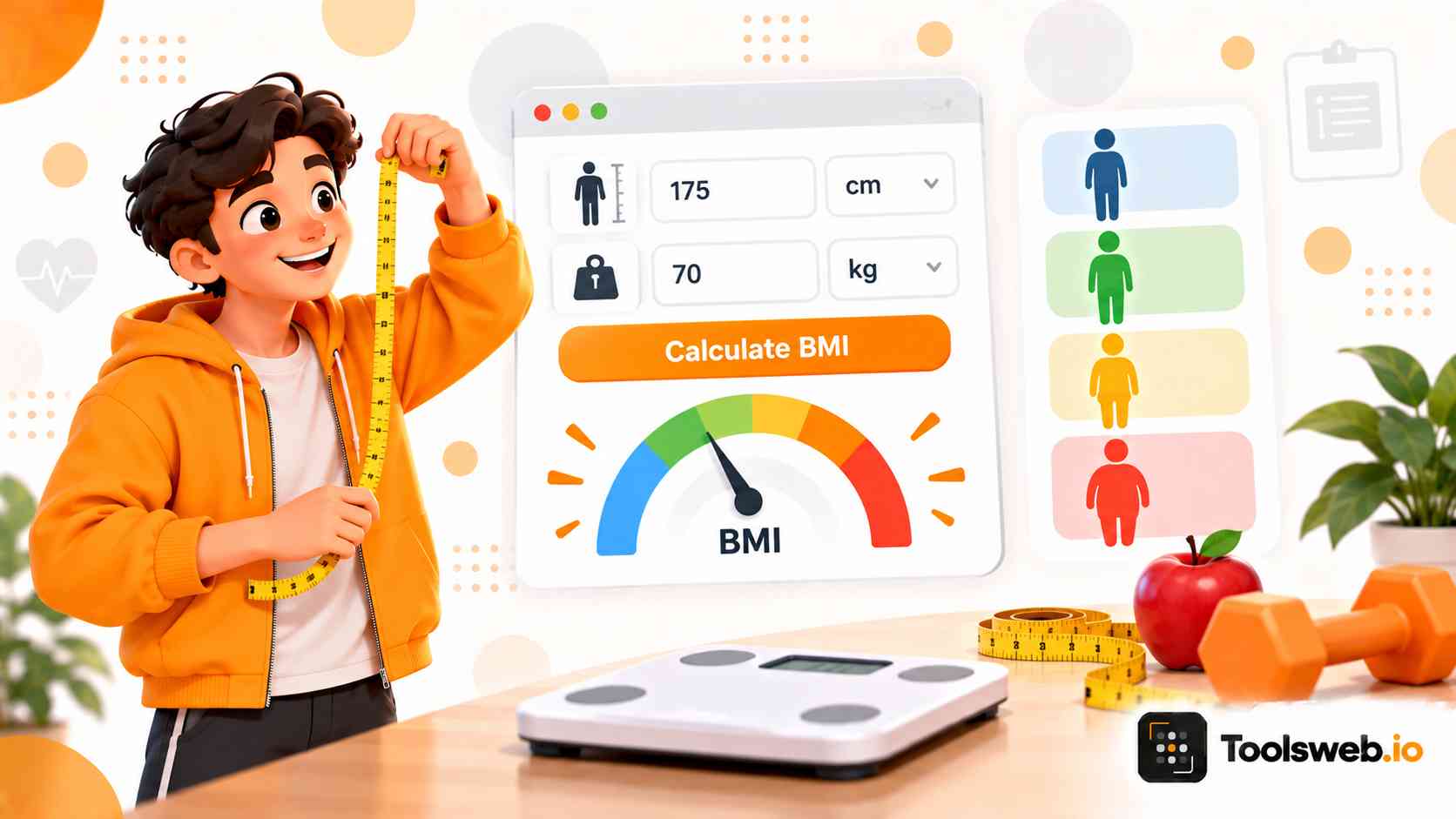
Calculate Body Mass Index with metric or imperial units.

BMI
22.9

Normal

Healthy range

56.7–76.3 kg

70 kg / (175 cm / 100)²

What is BMI?

Body Mass Index, or BMI, is a simple method used to measure body weight in relation to height. A Free BMI Calculator Check Your Body Mass Index tool helps calculate BMI value using height and weight measurements in kg and cm. It is commonly used to identify whether a person falls into a healthy BMI range, underweight category, overweight category, or obese category. 

BMI=Weight (kg)(Height (m))2 \text{BMI}=\frac{\text{Weight (kg)}}{\left(\text{Height (m)}\right)^2}

Variables Explained

  • Weight (kg) = Body weight in kilograms
  • Height (m) = Height in meters
  • BMI = Body Mass Index Healthcare providers and the World Health Organization use BMI measurement as a general health indicator for adults, children, and teens.

Metric Formula: The metric BMI formula uses kilograms and meters to calculate Body Mass Index (BMI). It is the standard formula used by healthcare organizations and medical professionals worldwide.

BMI=Weight (kg)(Height (m))2 \text{BMI}=\frac{\text{Weight (kg)}}{\left(\text{Height (m)}\right)^2}
Imperial Formula: The imperial BMI formula uses pounds and inches instead of metric units. This method is commonly used in the United States.
BMI=703×Weight (lb)(Height (in))2 \text{BMI}=703\times\frac{\text{Weight (lb)}}{\left(\text{Height (in)}\right)^2}

BMI Categories and chat

Underweight

A BMI below 18.5 places you in the underweight category. Being underweight can increase the risk of nutrient deficiencies, low energy levels, and weakened immunity.

Normal Weight

A BMI between 18.5 and 24.9 indicates a healthy weight range. Maintaining a healthy weight supports overall wellness and helps reduce the risk of chronic diseases.

Overweight

A BMI between 25 and 29.9 places you in the overweight category. Carrying extra body weight can increase the risk of high blood pressure, diabetes, and other health conditions.

Obesity

A BMI of 30 or higher places you in the obesity category. Excess body weight can increase the risk of heart disease, stroke, certain cancers, and other serious health problems.

BMI Chart for Adults, Men, Women, Teen and Children

Body Mass Index (BMI) helps estimate whether a person's weight falls within a healthy range based on height and weight. While BMI categories are generally the same for adults, BMI for teens and children is evaluated using age- and sex-specific growth percentiles.

BMI Range

Weight Category

Adults (Men & Women)

Teens & Children*

Below 18.5

Underweight

Underweight

Below 5th Percentile

18.5 – 24.9

Healthy Weight

Healthy Weight

5th–84th Percentile

25.0 – 29.9

Overweight

Overweight

85th–94th Percentile

30.0 – 34.9

Obesity Class I

Obese

95th Percentile or Above

35.0 – 39.9

Obesity Class II

Severely Obese

N/A

40.0 and Above

Obesity Class III

Morbidly Obese

N/A

*For children and teens (ages 2–19), BMI is interpreted using age- and sex-specific growth charts rather than standard adult BMI ranges.

How to Use This BMI Calculator

This calculator quickly measures body mass index using height and weight values.

Step 1

Enter Height

Add your height using cm, meters, feet, or inches.

Step 2

Enter Weight

Type your body weight in kg or pounds.

Step 3

Calculate BMI

Generate your BMI result instantly.

Step 4

Analyze BMI Result

Check your BMI category and weight status quickly.

Risks Associated with BMI Levels

BMI levels can help identify potential health risks linked to underweight, overweight, and obesity-related conditions.

Risks of Being Underweight

Being underweight may lead to malnutrition, vitamin deficiencies, anemia, weak immune function, osteoporosis, and reduced muscle mass.

Risks of Being Overweight

Being overweight can increase the risk of high blood pressure, high cholesterol, sleep apnea, cardiovascular disease, and metabolic disorders.

Obesity Related Health Conditions

Obesity is associated with Type 2 diabetes, coronary heart disease, stroke, fatty liver disease, osteoarthritis, and certain cancers.

Long Term Health Risks

Long term unhealthy BMI levels may reduce mobility, affect mental health, increase chronic disease risk, and lower overall quality of life.

Benefits of BMI Calculator

A BMI calculator helps people quickly check body mass index, weight status, and overall health indicators using simple height and weight measurements.

Quick Calculation

The calculator performs fast BMI calculations within seconds, making body weight assessment simple and convenient.

Easy to Use

Users only need to enter height and weight values to get accurate BMI results without complex formulas or manual calculations.

Instant Results

The tool instantly shows BMI value, BMI category, and healthy weight range for better health monitoring and wellness tracking.

Helps Monitor Weight Health

Regular BMI checks help monitor physical health, obesity risk, fitness level, and long term weight management goals.

Who Should Use This Tool?

This tools can make tasks easy for these :

Students

Helps students understand healthy body weight, BMI categories, and basic wellness monitoring for better physical health awareness.

Fitness Users

Useful for tracking BMI changes during workout plans, muscle gain, fitness assessment, and body weight management.

General Users

Anyone can use this BMI calculator to quickly check BMI values and monitor overall health status.

Weight Loss Programs

Supports weight loss tracking by helping users measure progress toward a healthy BMI range and fitness goals.

Healthcare and Wellness Tracking

Useful for preventive healthcare, obesity screening, wellness monitoring, and long-term health assessment.

Alternative Health Measurements

BMI is a useful screening tool, but other body measurements can provide a more detailed view of body composition, fat distribution, and overall health risk.

Waist Circumference

Waist circumference measures abdominal fat around the stomach area and helps identify obesity-related health risks such as cardiovascular disease, metabolic syndrome, and Type 2 diabetes.

Although no formula is required, waist circumference is measured directly around the abdomen using a measuring tape.

Waist-to-Hip Ratio (WHR)

Waist-to-Hip Ratio compares waist size to hip size to evaluate fat distribution and metabolic health risk more accurately than body weight alone.

WHR=Waist CircumferenceHip Circumference \text{WHR}=\frac{\text{Waist Circumference}}{\text{Hip Circumference}}
Higher WHR values may indicate a greater risk of cardiovascular and metabolic diseases.

Body Fat Percentage

Body fat percentage estimates how much of the body consists of fat tissue compared to lean body mass.

Body Fat Percentage=Fat MassTotal Body Weight×100 \text{Body Fat Percentage}= \frac{\text{Fat Mass}}{\text{Total Body Weight}} \times 100
This measurement provides a more direct assessment of body composition than BMI alone.

Skinfold Thickness

Skinfold thickness testing uses measurements from different body locations to estimate total body fat levels and physical fitness status.

The method involves measuring skinfold thickness with calipers at standardized body sites and applying body-fat estimation equations.

Body Density=Function of Skinfold Measurements \text{Body Density}=\text{Function of Skinfold Measurements}
Skinfold assessments are commonly used in fitness, sports science, and health evaluations to estimate body fat percentage.

Tips to Maintain a Healthy BMI

Maintaining a healthy BMI supports better physical health, wellness tracking, and long-term disease prevention.

Balanced Diet and Nutrition

Eat a balanced diet rich in fruits, vegetables, lean protein, healthy fats, and whole grains to support healthy body weight and nutritional health.

Regular Physical Activity

Regular exercise and physical activity help burn excess body fat, improve fitness levels, and support metabolic health and weight control.

Healthy Weight Management

Maintain healthy weight management habits by avoiding extreme dieting, controlling portion sizes, and following a consistent lifestyle routine.

Monitor BMI Regularly

Regular BMI monitoring helps track body weight changes, identify health risks early, and maintain long-term wellness goals.

Frequently Asked Questions

Find answers to common questions about BMI calculation, healthy BMI ranges, body weight assessment, and overall health monitoring.