Pregnancy Conception Calculator

The Pregnancy Conception Calculator estimates your conception date from your due date, LMP, ultrasound, gestational age, or birth date, then shows key pregnancy dates and timing.
Conception Date
2026-06-15
Estimated Ovulation

2026-06-15

LMP

2026-06-01

Gestational Age

20 weeks

Recent
Nothing here yetYour recent activity will appear here
DUE DATE

What is Pregnancy Conception?

Pregnancy conception means the estimated time when fertilization likely occurred. This calculator uses your LMP, due date, ultrasound, or other pregnancy dates to estimate when conception may have happened. It helps you understand pregnancy timing.
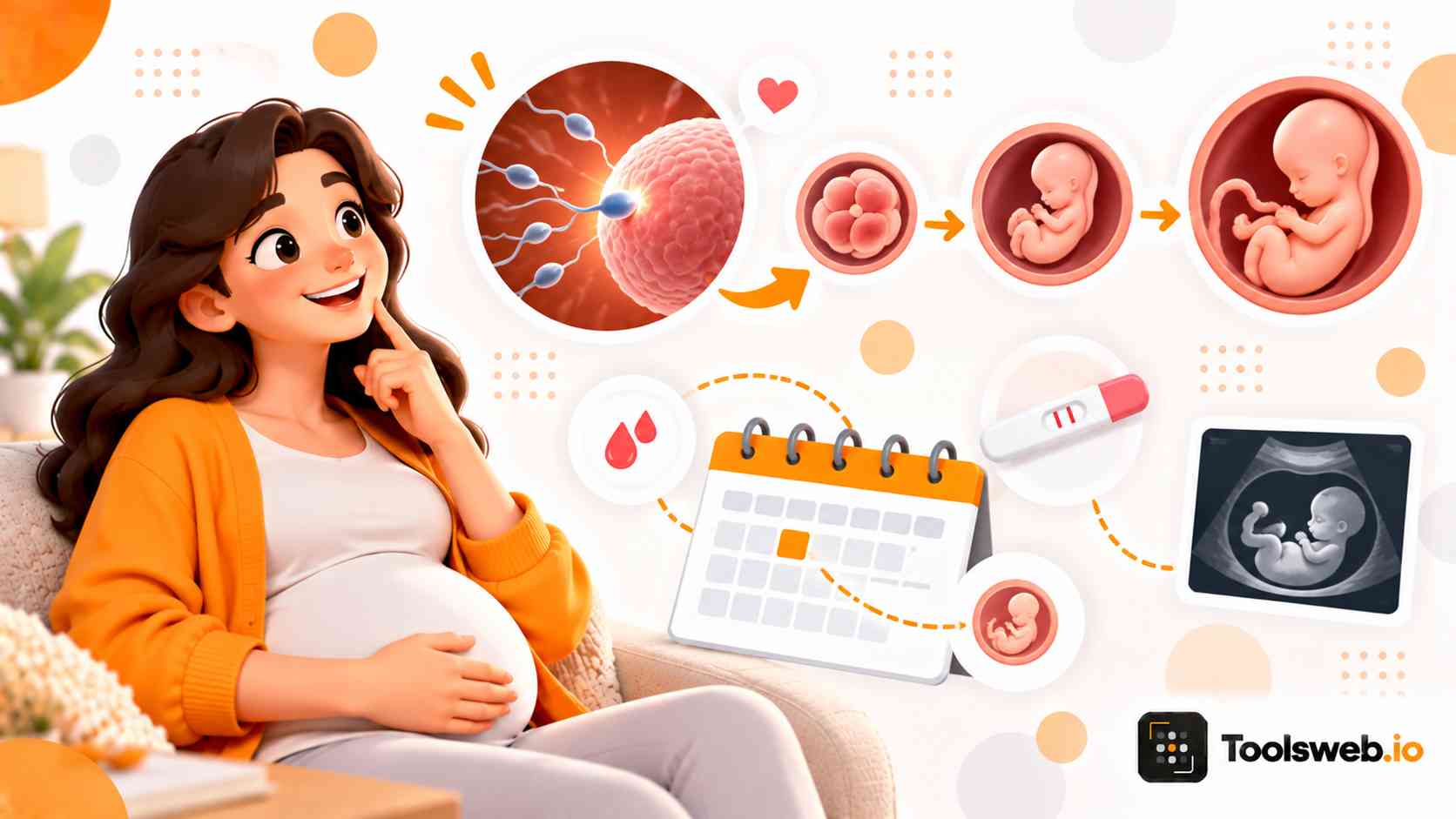
Pregnancy Conception Calculator showing estimated conception timing using pregnancy dates, a calendar, ultrasound, and pregnancy timeline.

How can you use our Pregnancy Conception Calculator?

Our Pregnancy Conception Calculator quickly estimates your conception date from a known pregnancy date. Choose a method, enter your date, and review the estimated result. It also shows related pregnancy dates.

Step 1

Select Your Method

Choose due date, ultrasound, or LMP.

Step 2

Enter Your Date

Enter the relevant pregnancy date.

Step 3

View Your Results

Get the conception date, estimated ovulation, and gestational age.

Step 4

Copy Your Result

Copy the calculated pregnancy details for future use.

Calculate Conception Date using different methods

Based on Due Date and Conception

Formula:
Conception Date = Due Date - 266 days

Step by step guide:

  1. Enter your estimated due date.
  2. Subtract 266 days.
  3. Use the result as the estimated conception date.

Practical Example:
If your due date is October 10, 2026, subtract 266 days. Your estimated conception date is January 17, 2026. This method gives an estimate because due dates themselves are estimates. ACOG uses 280 days from the first day of the LMP and about 266 days from conception. It works best when the due date comes from reliable dating.

Based on Last Menstrual Period and LMP

Formula:
Estimated Conception Date = First Day of LMP + 14 days

This formula works best for a typical 28 day cycle.

Step by step guide:

  1. Enter the first day of your last menstrual period.
  2. Add 14 days for estimated ovulation.
  3. Use that date as the estimated conception date.

Practical Example:
If your LMP began January 1, 2026, the estimate is January 15, 2026. Cycle length and ovulation can vary, so the date may differ. For irregular cycles, ovulation may occur earlier or later than day 14, so treat the result as a range.

Based on Ultrasound and Pregnancy Dating

Formula:
Conception Date = Ultrasound Date - (Gestational Age - 14 days)

Step by step guide:

  1. Enter the ultrasound date.
  2. Enter the gestational age shown by the scan.
  3. Subtract the adjusted gestational age from the scan date.

Practical Example:
A scan on June 1 showing 10 weeks gives an estimated conception date near April 6. Early ultrasound dating can be more accurate than LMP when dates are uncertain. A first trimester ultrasound is the most accurate ultrasound method for establishing or confirming gestational age.

Based on Gestational Age and Pregnancy Dating

Formula:
Conception Date = Reference Date - (Gestational Age - 14 days)

Step by step guide:

  1. Enter the date when gestational age was recorded.
  2. Enter gestational age in weeks and days.
  3. Subtract the age minus 14 days from that date.

Practical Example:
On June 1, a gestational age of 12 weeks gives an estimated conception date near March 23. Gestational age usually starts from the first day of the LMP. This approach works from a known gestational age, but clinical dating should follow the best available LMP or ultrasound evidence.

Based on Date of Birth for Conception

Formula:
Conception Date = Date of Birth - Gestational Age at Birth + 14 days

Step by step guide:

  1. Enter the baby's date of birth.
  2. Enter gestational age at birth if known.
  3. Subtract gestational age, then add 14 days.

Practical Example:
A baby born October 10 at 40 weeks gives an estimated conception date near January 17. If birth occurred before or after 40 weeks, use the known gestational age for a better estimate. This method estimates past conception and cannot prove the exact day fertilization occurred.

When Did I Conceive?

A conception date calculator estimates when fertilization likely occurred from known pregnancy dates. It cannot confirm an exact day.

Last Menstrual Period and Conception

Use your last menstrual period to estimate ovulation and conception. A typical 28 day cycle often places ovulation near day 14.

Due Date and Conception

Your due date can estimate conception by counting backward about 266 days. This gives a likely date, not a confirmed fertilization date.

Ultrasound and Pregnancy Dating

An ultrasound can estimate gestational age and help date pregnancy. Early scans generally give the strongest dating evidence.

How Accurate Is a Conception Date Calculator?

A conception date calculator gives an estimate, not proof of the exact day. LMP dates, cycle length, ovulation timing, and the dating method can change the result. First trimester ultrasound dating can provide stronger evidence when LMP dates are uncertain.

Conception Date vs Ovulation Date

Formula:
Estimated Conception Date = Ovulation Date

Fertilization usually occurs near ovulation when sperm meets the egg.

Step by step guide:

  1. Find your estimated ovulation date.
  2. Use the fertile window around ovulation.
  3. Treat conception as an estimate because sperm can survive for several days and the egg has a short fertilization window.

Practical Example:
If ovulation is estimated for March 20, conception may occur around March 20 when sperm and egg meet. Intercourse date and conception date are not always the same.

Fertilization, Conception, and Pregnancy

Fertilization happens when sperm joins an egg. The developing cell group then travels toward the uterus and implants in its lining. Conception calculators estimate timing from pregnancy dates, while clinical dating often uses LMP and ultrasound. Gestational age starts from the first day of the LMP.

References

https://www.acog.org/clinical/clinical-guidance/committee-opinion/articles/2017/05/methods-for-estimating-the-due-date https://www.acog.org/womens-health/faqs/ultrasound-exams

Explore Health Calculators

Find health calculators for BMI, body measurements, calories, fitness, and wellness calculations.

Frequently Asked Questions

These answers explain how conception dates, LMP, due dates, ultrasound, fertilization, and accuracy relate to pregnancy dating.