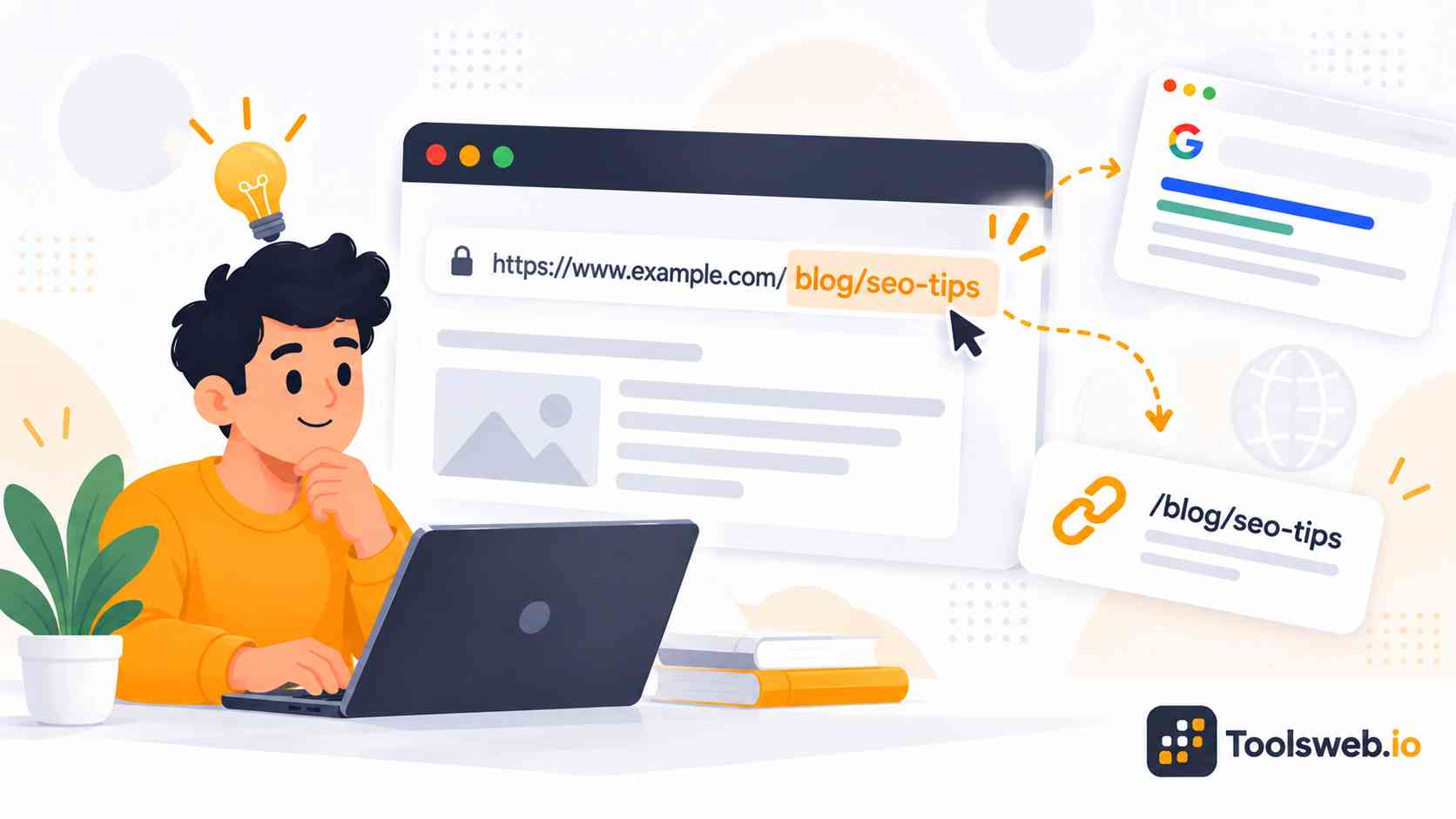
A URL slug generator helps you create clean, readable, and SEO-friendly URLs in seconds. This tool converts titles, headlines, keywords, and text into optimized slugs that improve search visibility, user experience, and website structure.
What is a URL Slug?
A URL slug is the readable text that appears after the main domain name in a URL. It usually includes keywords that describe the page content clearly.
For example, in example.com/seo-tools, the slug is seo-tools. Good slugs stay short, simple, and easy to read.
Why URL Slugs Matter for SEO
Search engines use URL slugs to understand page topics and keyword relevance. A clear slug improves content categorization and search visibility.Users also trust readable URLs more than random numbers or symbols. Clean slugs often improve click-through rates from search results.
Difference Between URLs and Slugs
A full URL includes the domain name, protocol, folders, and slug. The slug only refers to the final readable section of the URL.
For example, https://website.com/blog/url-slug-generator contains the slug url-slug-generator. The slug describes the specific page topic.
Good URL slugs use lowercase words, hyphens, and clear keywords. They avoid long phrases and unnecessary symbols.Examples include best-seo-tools, healthy-breakfast-recipes, and wordpress-speed-guide. These slugs stay readable for both users and search engines.
Common URL Slug Mistakes
Common URL slug mistakes include creating long and complex URLs, stuffing keywords, using underscores instead of hyphens, adding unnecessary dates or numbers, including special characters, and using capital letters. These practices can reduce readability, create SEO issues, and make URLs less user-friendly for both visitors and search engines.
How URL Slugs Improve SEO?
SEO-friendly URL slugs help search engines understand page topics, improve keyword relevance, and make URLs easier for users to read and trust. Clean, descriptive slugs enhance website organization, support better indexing, improve user experience, and can increase click-through rates by clearly indicating what a page is about.