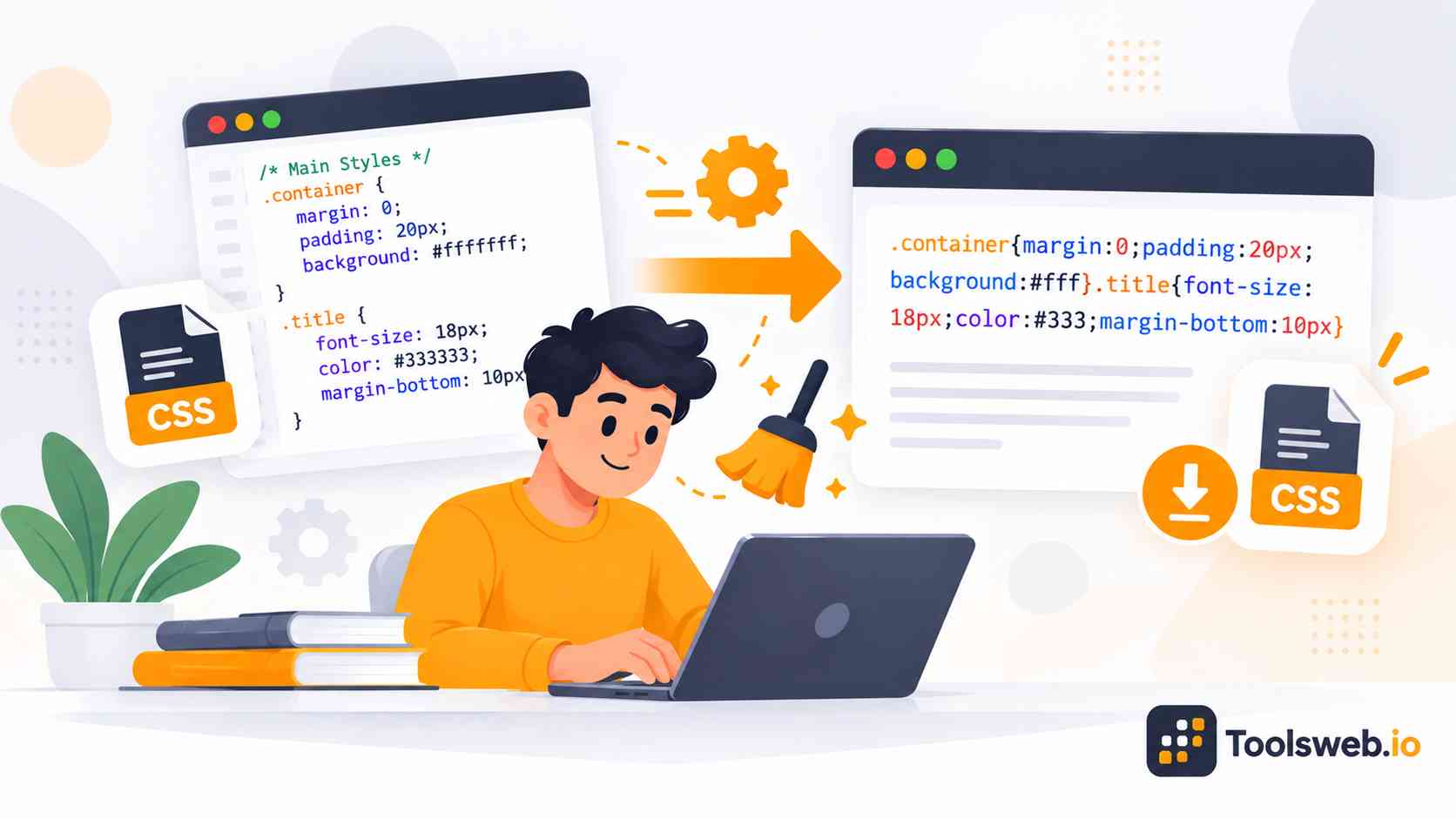
A CSS Minifier helps developers compress CSS code by removing extra spaces, comments, line breaks, and unnecessary characters. This process creates smaller stylesheet files that load faster and improve website performance.
What is CSS Minification?
CSS minification compresses stylesheet code by removing spaces, comments, tabs, and line breaks. The final output stays readable for browsers but becomes difficult for humans to edit manually. Developers often use CSS minifiers during website deployment and build optimization. This process creates lightweight stylesheets that improve loading speed and reduce bandwidth usage.
How CSS Compression Works
A CSS compressor scans the stylesheet and removes unnecessary formatting characters. It also shortens color values, combines rules, and optimizes declarations when possible. Most online CSS minifiers use automated parsing systems to create production-ready CSS. This process keeps the visual design intact while reducing the total file size.
Security and Privacy
This CSS Minifier processes code directly in your browser to provide a fast, secure, and private compression experience. The tool does not permanently store your CSS code, helping developers optimize stylesheets while maintaining control over their data and reducing privacy concerns.
Common CSS Minification Mistakes
CSS minification can sometimes cause styling issues when developers compress invalid code, remove important comments, break responsive media queries, or overlook browser compatibility. Testing optimized CSS before deployment helps ensure websites remain functional, responsive, and visually consistent across different devices and browsers.